
Many retirees view Social Security as much more than a monthly payment. It plays an essential role in ensuring financial security during retirement, yet its magnitude often surprises people. Curious about how vital this benefit is for most Americans? Let’s dig in.The Crucial Role of Social Security in RetirementFew support programs match Social Security’s impact on the financial stability of retirees. Without it, a significant percentage of older adults would fall below the poverty line. The scope of this support often goes unnoticed until you examine just how many lives it touches each year.The Center on Budget and Policy Priorities reported that Social Security lifted over 22 million people above the poverty line last year. Of this group, more than 16 million were adults age 65 and older. The program’s reach means that, for many, surviving without these benefits would be far more difficult, illustrating why it’s considered an economic cornerstone for retirees.How Social Security Shapes Household IncomeWhat might happen if Social Security did not exist? The numbers suggest a dramatic shift in the financial well-being of seniors. This safety net is a primary defense against poverty for a large segment of the population, and its absence would leave a glaring gap.If Social Security were removed, the poverty rate for adults age 65 and over would soar, moving from about 10 percent up to more than 37 percent. That’s a stark contrast that highlights just how much retirees rely on these monthly payments to meet their needs and maintain their standards of living.Why Retirees Depend on This BenefitIt may be tempting to think Social Security is just a minor piece of the retirement puzzle. However, for many retired Americans, it serves as either a major or minor source of household income. Yearly surveys of retirees prove this point time and again.Most retirees consistently say that Social Security plays a pivotal role in their financial well-being. Whether as the primary or a supplemental source, this benefit makes a tangible difference, allowing older adults to pay bills, cover healthcare, and maintain independence as they age.
Category: Articles
Article Summaries
-

Palantir Stock Drops Despite Strong Earnings: What’s Behind the Market Reaction?
the setup Palantir's recent quarterly results turned heads across the financial world. Even as positive earnings numbers arrived, the stock price chart moved in an unexpected direction. a surprise after success When a company outperforms, most expect a lift in market value. This time, the story had a twist that left both new and seasoned investors searching for answers. what’s happening The tech company announced strong revenue and profit growth this quarter. However, soon after the news broke, Palantir's stock price took a dip instead of a jump. mixed reactions from investors Some traders saw the selloff as an overreaction, while others worried about future growth. Wall Street analysts offered differing takes, adding to the confusion around Palantir's prospects. why it matters Stock movements that go against earnings news can rattle investor confidence. It often signals a deeper disconnect between company performance and market expectations. the bigger context for tech stocks Tech stocks are especially sensitive to shifts in sentiment and future forecasts. This unusual move has implications for how investors approach earnings reports in the sector. what to watch next Investors will keep a close eye on Palantir's next set of results for any signs of steady momentum. Any updates from management about new contracts or future guidance could quickly change the mood. the road ahead for Palantir Broader market trends and how the tech sector performs overall could shape Palantir's path. Watching the stock’s recovery—or further decline—will offer clues on investor sentiment moving forward. key takeaways Palantir reported strong quarterly financial performance. The stock price fell despite good earnings, puzzling many. Investors are watching for updates and future guidance. Unexpected stock moves can signal deeper market trends.
-

Why Wall Street Is Eyeing Hidden Stock Split Candidates Beyond Big Tech
the setup Excitement has been rippling through the stock market as investors search for companies poised for the next big move. Lately, artificial intelligence has captured most of the spotlight. However, another factor keeps pushing Wall Street higher: talk of potential stock splits. These events can draw fresh attention and create buzz around certain companies. trends fueling growth AI’s rapid evolution is only part of the story. Stock splits, especially from big names, have re-energized both seasoned and new investors who want shares at attractive price points. When a stock split is announced, it usually signals strong performance and positive momentum. Many shareholders see it as a sign that management feels confident about future growth. what’s happening Market watchers are eager to predict which companies might move next. Curiosity is especially high for the potential stock-split candidate that’s not the obvious household name. The focus has shifted away from recent favorites. Instead, speculation centers on a company with all the right conditions for a split, but without the current limelight. hidden candidates emerge Certain businesses quietly meet the profile: high share prices, consistent growth, and an established brand. These qualities often precede a split, catching the eye of analysts. While the public may bet on familiar tech giants, Wall Street insiders often uncover less-hyped opportunities ripe for this change. why it matters Anticipating a stock split can be more than just a guessing game. Splits often create buzz, attracting new investors who previously saw the stock as too expensive per share. A fresh crop of shareholders can inject new energy, boosting volume and, sometimes, the stock price itself. This ripple effect can benefit the wider market when influential companies take the plunge. accessibility and psychology Lower nominal share prices after a split may seem cosmetic, but they often make stocks feel more accessible to retail buyers. This accessibility can revitalize interest in the firm’s prospects. Such moves can also reinforce confidence in the company’s trajectory, both inside and outside the organization. what to watch next Stay alert for hints from companies that might be preparing a split. Look for board meeting discussions, remarks about share affordability, or a history of previous splits. Keep an eye on businesses with surging stock prices and mounting enthusiasm—especially those not dominating today’s headlines. These quiet contenders may surprise the market soon. investor behavior shifts Investors often react quickly to split announcements. Watch how trading volumes shift, as well as how online chatter increases for any newly split stock. Market reactions can create short-term volatility, so it’s wise to watch for lasting trends rather than knee-jerk momentum. key takeaways Stock splits can generate excitement and drive investor interest to new highs. Companies beyond the usual tech giants may soon announce splits, catching many off guard. Splits make shares more accessible, drawing in a broader base of investors. Watch for under-the-radar companies with strong fundamentals and rising share prices. Investor sentiment and participation often surge after a split is unveiled.
-

Berkshire Hathaway and Two Surprising Stocks for Bear Market Strength and Growth
Berkshire Hathaway often stands out as a symbol of resilience when markets turn rough. Investors appreciate its steady performance, careful management, and Warren Buffett’s legendary discipline. But even as Berkshire promises stability, two other stocks are shaping up as strong contenders for those who want bear market protection with extra upside potential. Why Berkshire Hathaway Stays Strong in Tough Times When volatility hits the market, some stocks remain rock solid while others falter. Berkshire Hathaway has built its reputation by thriving in downturns. Through careful stock selection and a diversified mix of businesses, it buffers investors from the sharp swings that haunt single-industry companies. Yet, there’s more to Berkshire’s long-term value than just stability. Its strategy focuses on businesses with durable pricing power and disciplined cash management. This approach positions it to not only weather market storms but also capitalize on opportunities that emerge. Many investors see Berkshire as a trusted defensive anchor in their portfolios. Finding Even Better Opportunities for Market Downturns While Berkshire earns its place as a bear market favorite, savvy investors might look for stocks with the potential for stronger rebounds. Some companies combine defensive qualities with growth prospects, offering more than just shelter from market turbulence. For example, firms in consumer staples or healthcare can deliver consistent demand and stronger earnings during uncertainty. The best bear market stocks typically share certain traits: recession-resistant products, robust cash flow, and conservative balance sheets. These businesses keep performing even when consumer spending pulls back. This reliability gives investors peace of mind, but in the right companies, it can also mean market-beating gains as soon as confidence returns. What to Look for in Top Bear Market Picks Not all stable stocks are created equal. It’s important to dig deeper and identify businesses with true staying power and some room to grow. Look for those with global reach, recognizable brands, and shareholder-friendly policies, such as steady dividends or active share buybacks. These features not only cushion your portfolio during drawdowns but also set you up for growth when markets eventually bounce back. Keeping an eye on a company’s leadership, culture, and ability to adapt can make all the difference. The right combination of defensive strength and moderate growth potential can turn a challenging market into an opportunity.
-
How to Invest $3,000: Top AI Stocks to Buy and Hold for Lasting Growth
The technology industry has been a driving force behind many outstanding stock market gains, with artificial intelligence leading a new wave of innovation. If you’re looking to tap into the transformative potential of AI, allocating your investment smartly across top-performing companies could set you up for long-term growth. Even a modest portfolio can flourish when placed in the right AI-driven businesses, giving you exposure to both the hardware and software sides of this rapidly expanding sector. #### The Promise of Artificial Intelligence for Investors AI is reshaping countless industries, making processes smarter and more efficient. Its impact reaches from healthcare to finance, and from retail to logistics. Companies at the forefront of this revolution are poised for exceptional growth as demand for AI-powered solutions skyrockets. For investors, this translates to an exciting opportunity. But the real rewards often go to those who identify and hold the right stocks through the ups and downs, riding the undeniable long-term trend. It’s no secret that not all players in the AI field will succeed equally. Market leaders with proven track records, strong partnerships, and a culture of innovation often emerge as the most resilient and profitable. By carefully choosing well-established companies, you reduce your risk while maximizing your potential for robust returns. #### Diversifying Across Hardware and Software Leaders Building a resilient AI portfolio involves more than picking just one company or focusing only on a single segment. While some firms create the hardware—the powerful chips and components that allow AI systems to function—others excel in software development, crafting the algorithms and applications that deliver real-world value. Balancing your investment between both hardware and software leaders ensures you benefit from multiple growth avenues. The intersection of hardware and software is where much of today’s AI magic takes place. By diversifying, you hedge against volatility in one area and tap into synergistic growth. Hardware providers deliver the muscle needed for advanced AI operations, while software innovators turn that potential into practical products and services that customers want right now. #### Holding for the Long Term: Patience Pays Off Timing the market can be tempting, but history clearly favors those who think long term. Over the past decade, select AI-focused companies have consistently rewarded patient investors. The most impressive returns have typically come to those who bought shares in strong businesses and let them grow, ignoring the daily noise and market swings. Holding your positions over time means riding out occasional downturns, but it also lets your gains compound as the companies expand and cement their leadership. Investors who stick with industry leaders often see the most satisfying results, enjoying both wealth accumulation and the excitement of backing groundbreaking technology as it shapes the world’s future. AI is not simply a fleeting trend—it’s an ongoing shift that will continue to reshape our everyday lives and the global economy. Placing your bets on a balanced set of hardware and software innovators, then holding steady, can help build lasting value. As AI matures and finds fresh applications, your investment today could be the foundation for tomorrow’s financial success.
-
Top Data Center and AI Stocks to Invest $2,000 in Today
Investing in the AI and Data Center Space Imagine a scenario where you are considering investing a modest sum in stocks with the goal of diversifying your portfolio. You’re keen on exploring growth themes but want to mitigate risk while tapping into potential high returns. The AI and data center sectors present a compelling opportunity that could align with your investment strategy. Amidst this bustling environment, companies like Vertiv and nVent, though not immediately associated with AI advancement, offer unique opportunities for discerning investors. They play crucial roles in providing essential services and solutions to data centers. #### Understanding Vertiv’s Role in Data Centers Vertiv, a company that supplies digital infrastructure to data centers and communication networks, plays an understated yet pivotal role in the realm of AI and data centers. With products ranging from power management to thermal management and monitoring solutions, Vertiv is well-positioned to support the growing demands of AI applications. Originally part of Emerson Electric, Vertiv was spun off to Platinum Equity and later went public, with David Cote—a seasoned former CEO of Honeywell—steering the ship. The company stands to gain significantly from the increase in data center investments necessitated by AI technologies. This potential is reflected in its backlog growth, which has shown remarkable consistency with a 10% increase reported during the first quarter. Such metrics highlight the company’s solid market positioning and capacity to benefit from the growing demand in its niche. #### nVent’s Role and Underrated Potential While Vertiv handles the infrastructure intricacies, nVent contributes in equally important ways but remains relatively underrated as an investment prospect in the AI and data center spectrum. Known for its electrical connection and protection solutions, nVent provides products that are critical to the safe and efficient operation of data centers. These services may not be immediately glamorous but are indispensable components of the industry’s backbone. Investors may overlook nVent due to its peripheral visibility in the AI field. However, its contribution to ensuring operational integrity, efficiency, and safety in data centers is a vital service, making it a stealthy yet potentially lucrative addition to a technology-heavy portfolio. By recognizing the behind-the-scenes role of nVent, investors can gain exposure to the robust growth of the AI and data center sectors. #### Investment Viability and Future Outlook When deciding on investments, it’s crucial to look beyond the obvious players and focus on what supports the industry’s expansion. Both Vertiv and nVent provide foundational services essential for sustaining the AI and data center growth trajectory. Their involvement in pivotal infrastructure positions them uniquely to benefit from technological advancements and increased deployment of data centers worldwide. Furthermore, these companies may offer a more stable and less volatile investment compared to pure tech stocks, due to their niche market focus and established presence. As the AI sector’s demand increases, Vertiv and nVent’s businesses will likely experience continued growth, making them worthwhile considerations for investors keen on future-proofing their portfolios while mitigating risks through diversification. Entering the AI and data center space can seem daunting, but by understanding the subtleties of companies like Vertiv and nVent, investors can craft portfolios that not only capture growth potential but also maintain a level of security.
-
Iconic Toy Brand Poised for Success Amid Ongoing Tariff Disputes
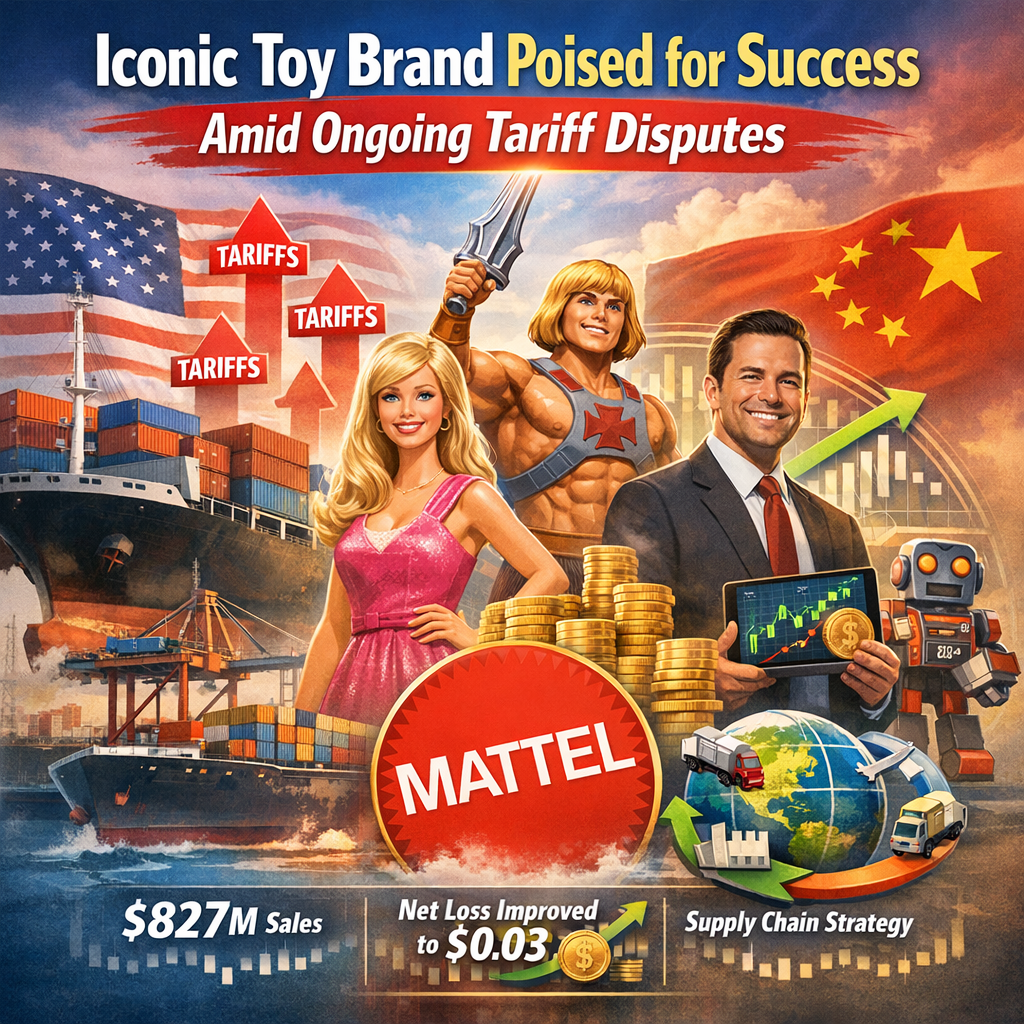
In the turbulent realm of international trade, Mattel, a renowned toy company, has managed to surprise the market with impressive first-quarter results. Investors and analysts have raised their eyebrows, not just because of the company’s double beat on Wall Street estimates but due to Mattel’s strategic maneuvering amid a challenging tariff environment. So, what exactly is fueling this optimism, and how is Mattel poised to navigate these economic headwinds? #### Navigating the Tariff War Tariffs have become a significant concern amongst American businesses, casting a shadow on profitability and growth prospects. Yet, Mattel seems unfazed, as the company’s management exudes confidence in their ability to endure these challenges. This strategic assertion has acted as a comforting balm for investors worried about international trade tensions. Not only has Mattel expressed optimism, but it has also shown resilience through proactive planning and resource management. This steadfast approach appears to be a key reason why investors maintain their interest in Mattel stocks, regardless of market volatility induced by tariff worries. Mattel’s focus remains on maintaining and enhancing its supply chain adaptability. This involves exploring alternative manufacturing locations and optimizing logistics to mitigate potential cost implications caused by new tariffs. By adopting these strategic pivots, Mattel makes it clear that it is ready to meet any obstacles head-on, ensuring the smooth flow of its business operations and reassuring stakeholders of its robust tariff strategy. #### Impressive Financial Performance Beyond strategic assurances, Mattel’s recent financial performance paints a promising picture. The company reported net sales of just under $827 million for the first quarter, reflecting a year-over-year growth of 2%. This growth is impressive, especially when juxtaposed with the industry’s general apprehension about economic stagnation. A crucial factor behind this positive outcome is Mattel’s commitment to innovation and revitalization of its classic toy lines, keeping them relevant and appealing across generations. Moreover, the non-GAAP net loss per share narrowed to $0.03 from a previous $0.05 — a milestone achievement underscoring Mattel’s operational efficiency and cost management improvements. This financial tightening not only showcases Mattel’s capability to streamline expenses but also indicates a strong basis for future profitability. The company’s strategic focus on core brands, cost-optimization initiatives, and expansion into digital and gaming segments has played a vital role in these positive financial trends. #### Investor and Analyst Confidence The convergence of strategic foresight and improving fundamentals has done more than just buoy spirits within the company. Both investors and analysts have expressed confidence in Mattel’s long-term prospects, backed by its readiness to weather economic uncertainties. This optimism partly stems from Mattel’s proactive stance on potential tariff challenges and its consistent financial performance, paving the way for increased shareholder value. Analysts are particularly intrigued by Mattel’s strategy to enhance its market position through brand innovation and diversification. By focusing not just on product expansion but also on strategic partnerships and digital engagement, Mattel aims to fortify its position in the competitive toy market. These initiatives signal a clear path toward sustainable growth, making Mattel a favorite in analysts’ portfolios, with many anticipating strong returns as these strategies come to fruition. In conclusion, Mattel’s triumphant stride amid challenging trade environments is as much about tactical resilience as it is about financial prudence. The company’s unwavering commitment to adaptability and innovation captures the essence of why it remains a compelling choice for investors and analysts alike. While the road ahead might be complex due to global trade uncertainties, Mattel’s strategic positioning provides a reassuring sense of promise for the future.
-

Wall Street’s Top Recommendations: Magnificent Buys to Consider Now
Excitement is brewing around Honeywell International as insights from analysts spotlight its potential to outperform in the market. Accompanied by industrial giants Johnson Controls and 3M, Honeywell is now part of an elite group that investors should pay close attention to—both in the near and extended future. A deeper dive into Honeywell’s market strategies and impressive quarterly results reveals more about this promising investment opportunity. #### Honeywell’s Stellar Quarterly Performance Why is Honeywell catching everyone’s eye? A glimpse into its recent quarterly performance might provide some answers. The company reported robust results for the first quarter, which led management to raise the midpoint of their full-year guidance. The updated guidance reflects not only the strong financials but also incorporates current tariff levels, offering a balanced risk perspective. The management team’s proactive approach highlights a commitment to sustained growth and resilience. Such results create a solid foundation that inspires confidence among investors, suggesting that Honeywell is not just riding temporary success but is poised for lasting triumph. #### Aerospace and Automation Driving Growth Delving into Honeywell’s business sectors reveals pivotal drivers behind its growth. The aerospace division stands out due to a surge in aircraft production and an increase in flight departures. As travel recovers globally, this segment is positioned to capitalize on the heightened demand. Further driving Honeywell’s success is its innovative strides in building automation. An enthusiastic CFO Mike Stepniak discussed during the earnings call the notable performance in Building Solutions, which saw double-digit growth for two consecutive quarters. This highlights Honeywell’s adeptness at navigating varied market landscapes by tailoring solutions that meet evolving needs, further establishing its prowess in the industrial sector. #### The Strategic Advantage What sets Honeywell apart in the competitive industrial landscape? It’s the strategic foresight in addressing diverse market demands while maintaining financial discipline. The company’s agility in adapting to economic shifts and focusing on high-growth markets like aerospace and building automation positions it strategically for future success. This blend of strategic foresight and operational excellence gives Honeywell a distinct edge over competitors. Investors wary of macroeconomic unpredictabilities may find solace in Honeywell’s balanced approach, which looks to capitalize on opportunities while mitigating risks effectively. The combination of a strong quarterly performance, sectoral growth drivers, and strategic positioning underscores Honeywell’s potential as an outperformer in the market. With astute management steering the ship, investors have plenty to be optimistic about as Honeywell continues to chart a course toward sustained industry leadership.
-
Top Pick: The One Stock to Buy and Hold Forever
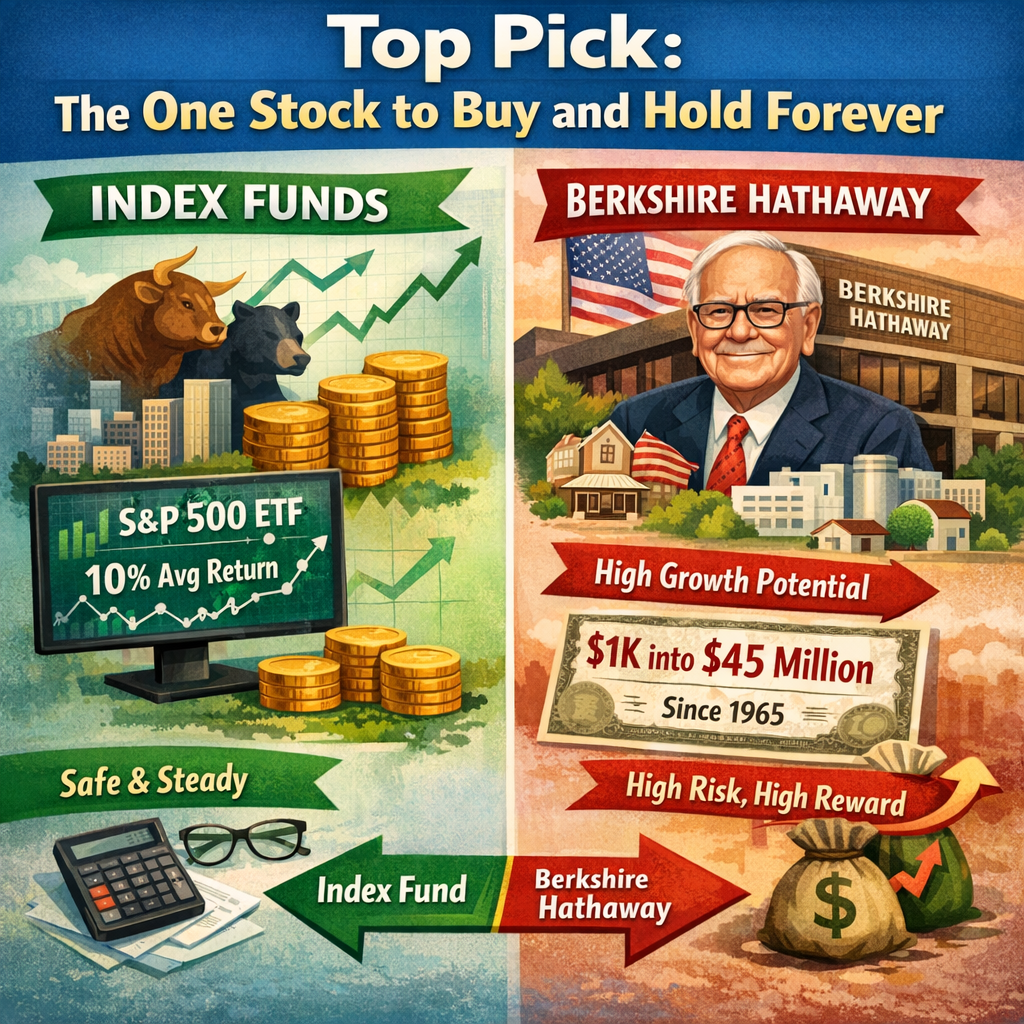
Investing in the stock market can be daunting, especially if you lack the time to analyze each stock. However, there’s a straightforward option that often emerges as a smart choice. What could this option be that simplifies investing while offering substantial returns? #### The Wisdom of Index Funds Investing in an S&P 500 index fund or an ETF is a popular choice among investors. But why does it gain such attention? One reason is its impressive track record. Since its inception in 1957, this broad-market large-cap index has consistently delivered an average annual return of about 10%. That’s a compelling statistic. It becomes even more intriguing when you consider that most professional fund managers struggle to outperform the index in the long run. This is where John Bogle’s insight comes into play. As the founder of Vanguard and the pioneer of index investing, Bogle advocated for buying the entire market. By embracing this philosophy, investors can potentially avoid the pitfalls of trying to outsmart the market. Index funds offer diversification, spreading your investment across a wide range of companies, thus minimizing risk. This strategy removes the guesswork. Instead of placing all your bets on a single company, you gain exposure to a vast array of industries and leaders. This approach democratizes access to market gains, allowing even novice investors to enjoy returns similar to seasoned professionals. It’s a case of simplicity meeting performance, contributing to its enduring appeal. #### Berkshire Hathaway: The Exception to the Rule While index funds offer stability, what if there was a stock that not only matched but exceeded these returns? Enter Berkshire Hathaway, headed by the legendary Warren Buffett. Since Buffett gained control in 1965, the stock’s performance has been nothing short of spectacular. A $1,000 investment on that pivotal day would have transformed into nearly $45 million today. Contrast this with the same investment in the S&P 500, which would have grown to around $339,000. This stark difference highlights the potential of an extraordinary stock. What sets Berkshire Hathaway apart is its value-based investment philosophy. Buffett’s approach focuses on acquiring undervalued companies with strong fundamentals, then nurturing them for long-term growth. This strategy not only preserved the textile business but turned Berkshire into a diversified conglomerate with interests spanning insurance, utilities, and consumer goods, among other sectors. The company’s consistent outperformance suggests that the right stock, with sound management and strategy, can defy market averages. #### Choosing Your Investment Path With the knowledge of these two investment avenues, the question arises: which path should you pursue? Each has its merits. Index funds offer a hands-off approach. You invest broadly, avoid the need for constant market monitoring, and potentially enjoy stable returns over time. It’s an efficient method for those who prefer simplicity and reduced risk. On the other hand, betting on an exceptional company like Berkshire Hathaway presents an opportunity for substantial gains. However, it comes with higher risk and requires confidence in a company’s management and future prospects. While this path offers the excitement of potentially higher returns, it demands more due diligence and a willingness to weather any company-specific challenges. In the end, your choice depends on your risk tolerance, investment knowledge, and financial goals. For those with a penchant for steady and predictable outcomes, index funds might be the way to go. Conversely, for investors with the appetite for calculated risk and belief in certain enterprises, stocks like Berkshire Hathaway could be more attractive. Both have their place in a well-rounded investment strategy, catering to different preferences and financial aspirations.
-
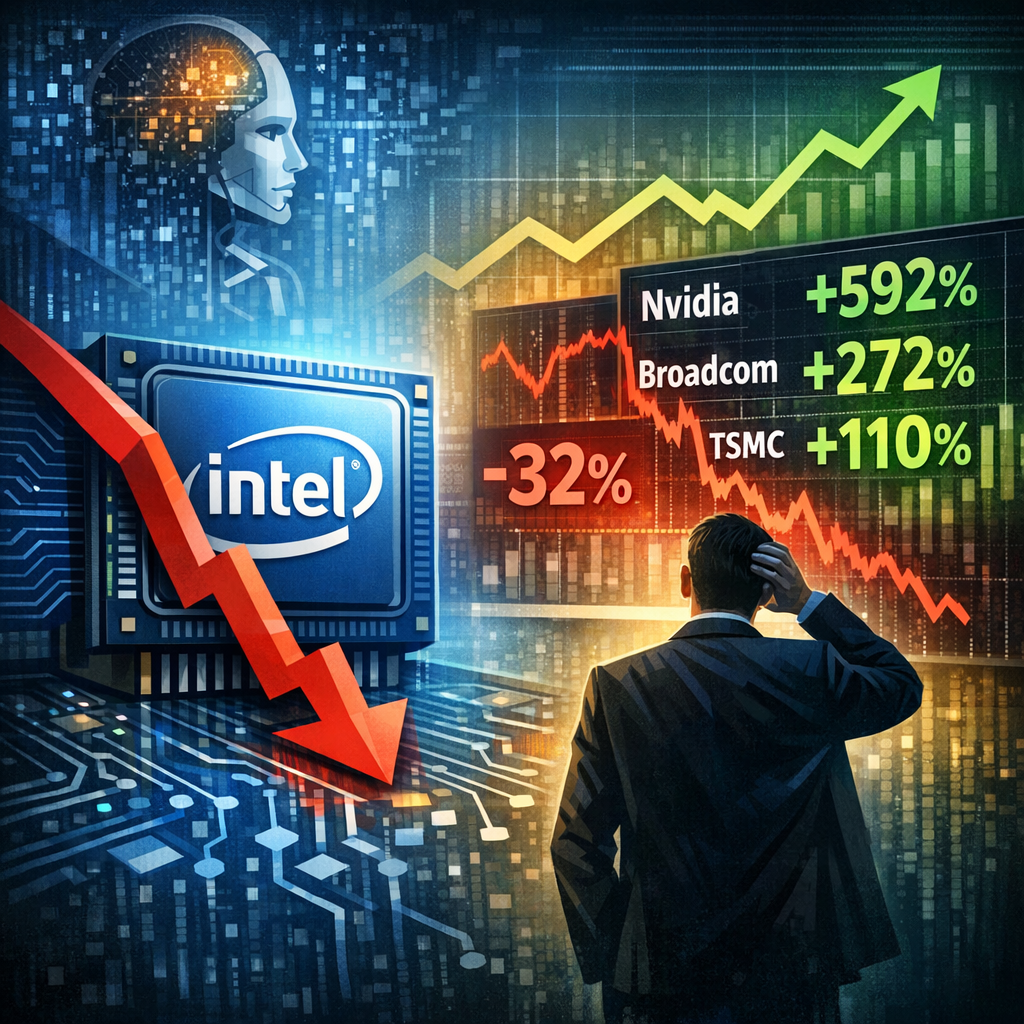
Evaluating Intel Stock: Should You Invest Today?
In recent years, the technology sector has experienced a transformative shift thanks to the artificial intelligence (AI) revolution. Companies across this landscape have reaped tremendous rewards, particularly those linked to the semiconductor industry. This surge in demand is largely driven by their critical role in the development of generative AI models. As AI becomes more mainstream, the semiconductor companies have found themselves at the forefront of this innovation wave. #### The Meteoric Rise of Semiconductor Stocks The release of ChatGPT on November 30, 2022, marked a pivotal moment for semiconductor stocks. Nvidia, Broadcom, and Taiwan Semiconductor Manufacturing witnessed remarkable share price increases of 592%, 272%, and 110%, respectively, since this event. Such extraordinary stock performances highlight the indispensable role semiconductors play in AI advancements. The promising returns in this sector are not limited to just a few companies. The VanEck Semiconductor ETF, encompassing a broader swath of the industry, delivered an impressive 93% total return during the same timeframe. This widespread growth underscores the sector’s robust potential, enticing investors with the promise of hefty returns. #### The Flip Side: Lagging Performers in a Booming Market Despite the widespread success, not every semiconductor company has thrived. Intel, a significant player in the field, has faced challenges that contrast sharply with the overall industry buoyancy. Since the AI surge initiated by ChatGPT, Intel’s stock has plummeted by 32%. This downturn highlights the variability within the sector despite an otherwise favorable market. For investors, this serves as a reminder that even during industry-wide booms, individual company performance can diverge due to specific operational, market, or strategic challenges. #### What’s Driving Individual Performance Discrepancies? The remarkable disparity between winners and laggards in the semiconductor space can be attributed to various factors. Companies like Nvidia and Broadcom are positioned at the cutting edge of AI technology, often leading the charge with innovations that directly contribute to AI development. In contrast, firms like Intel may face challenges due to market share battles, strategic shifts, or delays in adopting next-gen technologies. As AI continues to evolve, companies that quickly adapt and align their strategies with technological advancements are poised to benefit more significantly. This highlights the importance of strategic agility and forward-thinking in a rapidly changing technological landscape. The AI-driven surge in semiconductor stocks narrates a story of triumph and caution. While many have reaped rewards from this rapid technological evolution, some have witnessed significant setbacks. For investors, discerning between companies that capitalize on AI’s potential and those struggling to keep pace is crucial in navigating this dynamic sector.