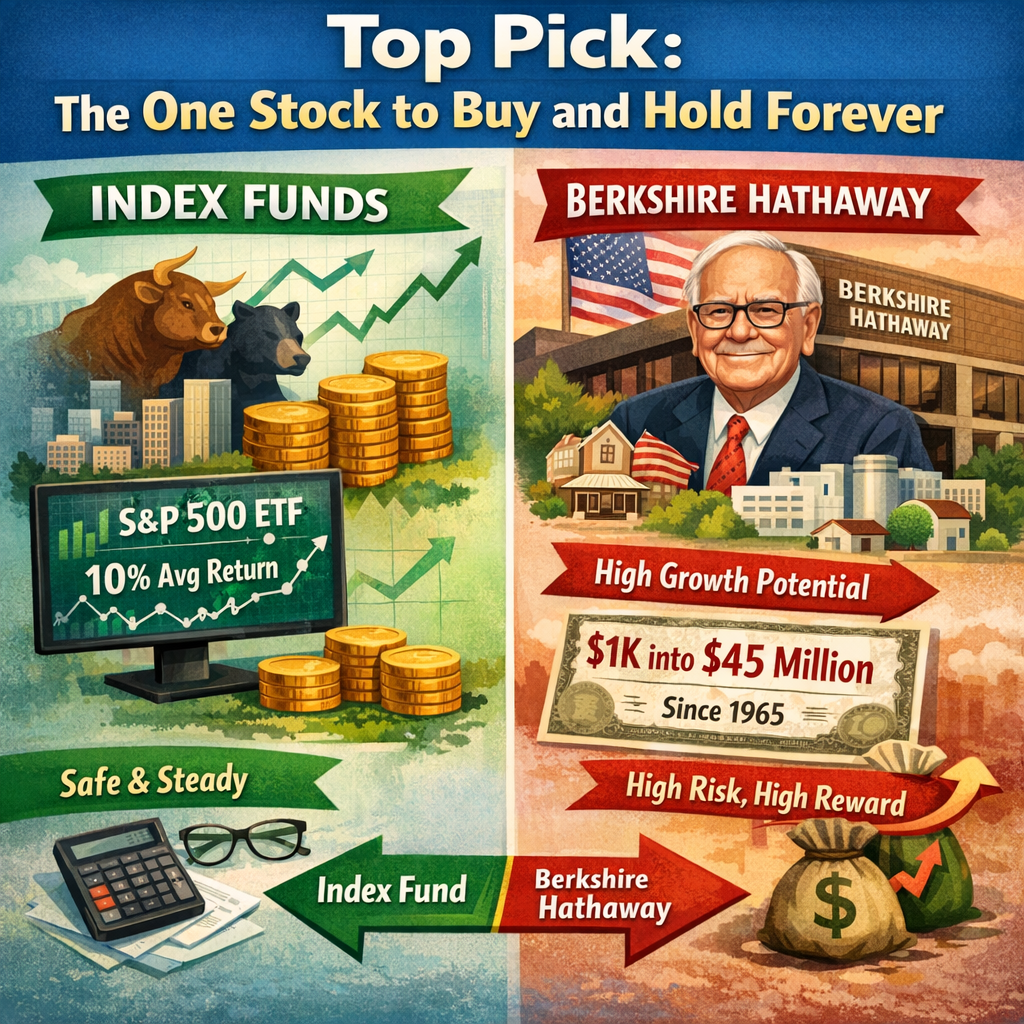
Investing in the stock market can be daunting, especially if you lack the time to analyze each stock. However, there’s a straightforward option that often emerges as a smart choice. What could this option be that simplifies investing while offering substantial returns? #### The Wisdom of Index Funds Investing in an S&P 500 index fund or an ETF is a popular choice among investors. But why does it gain such attention? One reason is its impressive track record. Since its inception in 1957, this broad-market large-cap index has consistently delivered an average annual return of about 10%. That’s a compelling statistic. It becomes even more intriguing when you consider that most professional fund managers struggle to outperform the index in the long run. This is where John Bogle’s insight comes into play. As the founder of Vanguard and the pioneer of index investing, Bogle advocated for buying the entire market. By embracing this philosophy, investors can potentially avoid the pitfalls of trying to outsmart the market. Index funds offer diversification, spreading your investment across a wide range of companies, thus minimizing risk. This strategy removes the guesswork. Instead of placing all your bets on a single company, you gain exposure to a vast array of industries and leaders. This approach democratizes access to market gains, allowing even novice investors to enjoy returns similar to seasoned professionals. It’s a case of simplicity meeting performance, contributing to its enduring appeal. #### Berkshire Hathaway: The Exception to the Rule While index funds offer stability, what if there was a stock that not only matched but exceeded these returns? Enter Berkshire Hathaway, headed by the legendary Warren Buffett. Since Buffett gained control in 1965, the stock’s performance has been nothing short of spectacular. A $1,000 investment on that pivotal day would have transformed into nearly $45 million today. Contrast this with the same investment in the S&P 500, which would have grown to around $339,000. This stark difference highlights the potential of an extraordinary stock. What sets Berkshire Hathaway apart is its value-based investment philosophy. Buffett’s approach focuses on acquiring undervalued companies with strong fundamentals, then nurturing them for long-term growth. This strategy not only preserved the textile business but turned Berkshire into a diversified conglomerate with interests spanning insurance, utilities, and consumer goods, among other sectors. The company’s consistent outperformance suggests that the right stock, with sound management and strategy, can defy market averages. #### Choosing Your Investment Path With the knowledge of these two investment avenues, the question arises: which path should you pursue? Each has its merits. Index funds offer a hands-off approach. You invest broadly, avoid the need for constant market monitoring, and potentially enjoy stable returns over time. It’s an efficient method for those who prefer simplicity and reduced risk. On the other hand, betting on an exceptional company like Berkshire Hathaway presents an opportunity for substantial gains. However, it comes with higher risk and requires confidence in a company’s management and future prospects. While this path offers the excitement of potentially higher returns, it demands more due diligence and a willingness to weather any company-specific challenges. In the end, your choice depends on your risk tolerance, investment knowledge, and financial goals. For those with a penchant for steady and predictable outcomes, index funds might be the way to go. Conversely, for investors with the appetite for calculated risk and belief in certain enterprises, stocks like Berkshire Hathaway could be more attractive. Both have their place in a well-rounded investment strategy, catering to different preferences and financial aspirations.
Leave a Reply